
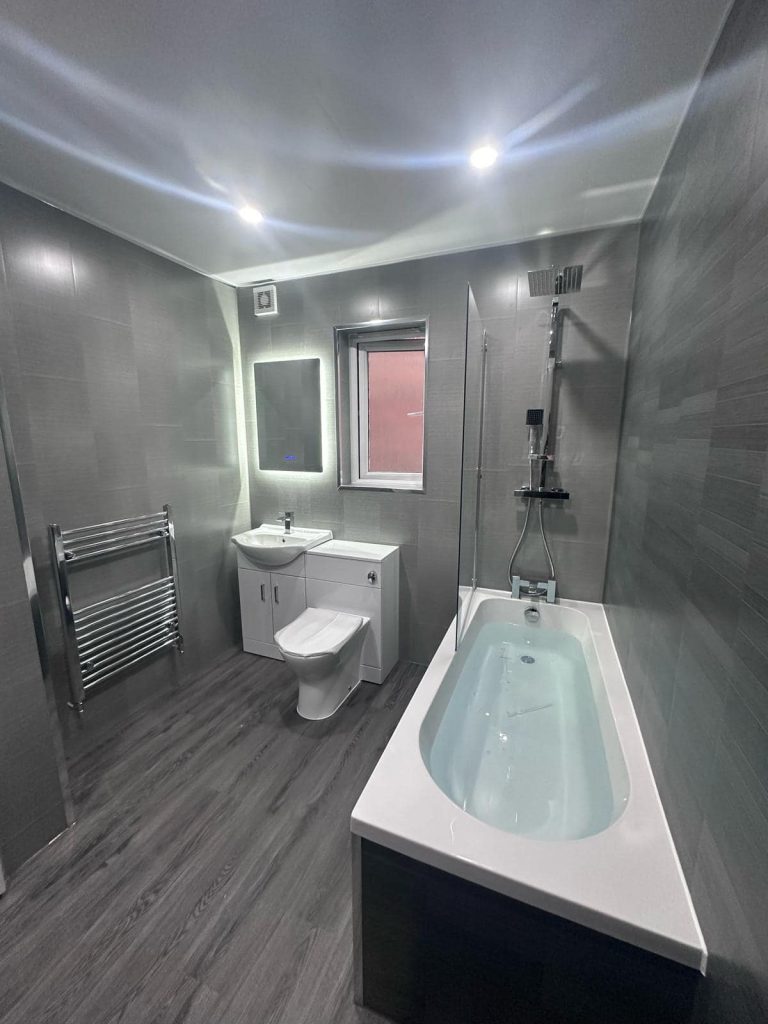
Traditional bathrooms are beginning to show their limits. Grout lines trap dirt, tiles crack over time, and leaks can lead to expensive repairs. That’s why more homeowners are switching to wet wall bathrooms — a cleaner, smarter, and more efficient way to design your space. By combining wall panels, waterproof systems, and seamless finishes, these modern installations redefine what a bathroom wall can do. If you’re planning a renovation or want to explore how this upgrade can transform your home, you can contact Annick Bathrooms to book a free home survey or consultation.
What Exactly Is a Wet Wall?
A wet wall is a waterproof panel system designed to replace traditional tiles. Instead of laying dozens of tiles and sealing grout lines, large waterproof panels are fitted to the walls to create a seamless surface. They’re made from durable materials like PVC, acrylic, or composite laminate, which makes them strong, stylish, and easy to maintain.
Unlike a wet room, which involves fully waterproofing the floor and walls of the entire space, a wet wall focuses on protecting the wall areas most exposed to moisture — like the shower zone or around the bath. The result is a sleek, modern look that also keeps maintenance to a minimum.
How Wet Wall Systems Work
Wet wall systems are built to resist moisture from the inside out. Panels are installed using a tongue-and-groove system or sealed joints that lock together, forming a waterproof barrier. Once fitted, the joints are sealed with watertight trims to ensure there are no gaps where water can seep through. Because there’s no grout, there’s also no chance of mould forming in hard-to-reach spots.
This system not only prevents leaks but also provides long-lasting durability. The smooth, jointless finish makes cleaning effortless — just a quick wipe with a soft cloth and mild cleaner. No scrubbing, no re-grouting, and no costly repairs.
Common Materials Used for Wet Wall Panels
When selecting wet wall panels, homeowners have a few strong material choices, each with its own strengths:
- PVC Panels – Lightweight, budget-friendly, and highly water-resistant. Perfect for quick installations.
- Acrylic Panels – Provide a glossy, glass-like appearance that adds a modern touch.
- Laminate Panels – Known for premium aesthetics, they can replicate natural stone or wood textures.
- Composite Panels – Extremely durable and ideal for high-moisture areas like family bathrooms.
These materials are designed to handle the daily wear and tear of busy households while maintaining a stylish and contemporary finish.
Visit annick-bathrooms.co.uk today to learn more or book your free consultation. Your dream bathroom is just a few clicks away.
10 Reasons Why Wet Wall Bathrooms Are the Future
Homeowners today are rethinking how they approach bathroom design—and one trend is clearly leading the way. Wet wall bathrooms, featuring seamless bathroom wall panels, are becoming the go-to choice for people who want a cleaner, smarter, and more stylish upgrade. Whether you are building from scratch or refreshing an old space, wet wall systems offer a practical, elegant solution that redefines comfort and convenience. Let’s look at the top ten reasons why wet wall bathrooms are the future.
1. Low Maintenance and Easy Cleaning
Traditional tiled bathrooms require regular scrubbing and re-grouting to keep mould and mildew at bay. Wet wall bathrooms eliminate this hassle entirely. With bathroom wall panels, there are no grout lines for dirt to hide in, and a quick wipe with a non-abrasive cleaner keeps the walls spotless. It’s a low-maintenance option that makes everyday cleaning simple, fast, and stress-free.
2. Superior Waterproofing and Durability
One of the biggest advantages of wet wall systems is their exceptional waterproofing. Seam-sealed panels prevent moisture from seeping through, which reduces the risk of hidden water damage behind walls. When properly installed, these panels create a continuous, watertight surface—ideal for wet rooms and high-moisture environments. You can trust that your walls will stay dry and durable for years to come.
3. Faster and Cleaner Installation
Unlike tiles, wet wall panels can be installed over existing surfaces, saving time and labour costs. Installers spend less time prepping and grouting, which means a faster turnaround and less mess in your home. Many full bathroom installations using panels can be completed in just a few days, offering immediate impact without the long wait.
4. Stylish and Versatile Design Options
Modern wet wall panels are available in a wide range of finishes, from marble and stone effects to wood grains and contemporary textures. Their seamless look and minimal joints create a sophisticated aesthetic that works beautifully with both traditional and modern interiors. Whether you prefer a sleek, minimalist style or a warm, natural feel, panels give you the flexibility to match any bathroom design.
5. Cost-Effectiveness in the Long Run
Wet wall bathrooms often cost less to maintain over time. You save on cleaning supplies, grout repairs, and potential moisture damage. The durability of quality panels also means fewer replacements or touch-ups. For homeowners looking to invest wisely, wet walls are a cost-efficient choice that offers long-term value.
6. Better for Smaller or Compact Bathrooms
If you have a compact space, wet wall panels help make the most of every inch. With their smooth, reflective surfaces and minimal joins, they create the illusion of a larger area. The absence of bulky tiles and heavy grout lines keeps the design clean, open, and visually spacious.
7. Sustainable and Eco-Friendly Benefits
Sustainability plays a growing role in modern renovations. Many bathroom panel manufacturers now use recyclable materials or panels designed for longer lifespans, reducing waste over time. Plus, with less reliance on grout, cement, and adhesives, wet wall bathrooms produce fewer emissions during installation.
8. Adaptable for Retrofit and Renovations
For homeowners upgrading older bathrooms, wet wall systems are a game-changer. Panels can be fitted directly over old tiles or outdated surfaces, eliminating the need for a full demolition. This adaptability saves time and minimises disruption, making renovations smoother and more affordable.
9. Improved Hygiene and Health
With fewer seams and no porous grout, wet wall bathrooms offer a cleaner environment. They limit the growth of mould, bacteria, and grime—ideal for families with children or allergy-prone users. The hygienic, easy-to-clean surfaces help keep your bathroom fresh and safe every day.
10. Future-Proofing and Market Appeal
Wet wall bathrooms are quickly becoming a symbol of modern living. They add a premium look that appeals to potential buyers or renters, helping your home stand out in the market. As the demand for efficient, low-maintenance interiors continues to rise, investing in wet wall systems is a smart move for the future.
Design, Installation & Practical Considerations
When planning a bathroom renovation, design and practicality must go hand in hand. Choosing the right wet wall system can completely transform how your bathroom looks, feels, and functions. Beyond visual appeal, smart design and correct installation will determine how well your bathroom stands up to daily moisture, cleaning, and wear over time. Before committing to materials or layouts, it’s essential to plan carefully and understand the technical aspects that ensure a long-lasting and watertight result.
Plan your layout before installation
The foundation of any successful wet wall installation begins with thoughtful planning. Start by assessing your layout, plumbing routes, and existing wall conditions. Think about where fixtures like the shower, bath, and vanity will sit, as well as how to minimize visible joints for a cleaner, more seamless appearance. Walls should be flat, dry, and strong enough to support the chosen wall panels, especially in high-moisture zones such as shower enclosures.
If you are incorporating recessed shelves or niches, confirm that the framing and waterproof backboards are properly reinforced. A professional installer can evaluate the structural integrity and recommend suitable panel types based on material thickness, backing, and adhesive strength.
Drainage, falls, and gradients
When combining panels with a wet room, correct drainage design is crucial. A well-planned gradient ensures water flows efficiently toward the drain, preventing puddling or water migration under flooring. Inadequate slopes can lead to moisture damage over time, even with waterproof wall coverings.
The fall in a wet room floor should typically be between 1:80 and 1:100, depending on the drain type. This ensures that surface water drains quickly without affecting comfort or accessibility. Properly integrated shower trays or linear drains can further improve flow efficiency while maintaining a sleek, modern look.
Compatibility with floors, trims, and transitions
To achieve a cohesive finish, make sure your panels, trims, and flooring are fully compatible. PVC and laminate wall systems often have their own transition trims designed to seal edges neatly where the wall meets the floor or ceiling. Inconsistent materials or poorly matched trims can lead to visible gaps or water ingress.
Choose trims that match the panel finish and confirm that all joints are sealed with manufacturer-approved silicone. Also, consider slip-resistant flooring for added safety in wet zones. This coordination ensures your bathroom wall design not only looks polished but performs reliably for years.
Sealing, ventilation, and access
Waterproofing alone isn’t enough. Proper sealing and ventilation play a big part in maintaining air quality and structural integrity. Always seal panel joints, corners, and edges thoroughly to prevent water from seeping behind them. Leave sufficient ventilation gaps or install extractor fans to manage condensation effectively.
Access panels should also be planned for hidden plumbing areas or valve connections, allowing maintenance without removing the wall panels entirely.
Building regulations, warranties, and compliance
In the UK, all bathroom installations must meet relevant building regulations that ensure safety and moisture protection. Use only panels rated for high-humidity areas and confirm that adhesives and sealants comply with British Standards. Warranties are another key consideration—many quality manufacturers offer 10 to 15 years of coverage against water damage or delamination, provided their installation instructions are followed correctly.
Before you start, consult your installer or supplier about required certifications and aftercare guidelines. Taking these extra steps not only protects your investment but also gives you peace of mind knowing your bathroom meets professional standards.
Challenges & Solutions: What to Know Before Choosing Wet Wall Bathrooms
When upgrading your bathroom, practicality and longevity matter as much as aesthetics. While bathroom wall panels have become a popular alternative to traditional tiles, many homeowners still have questions about their durability, maintenance, and cost-effectiveness. Let’s clear up some common concerns and explore smart solutions for designing a bathroom that’s both stylish and easy to maintain.
Common Concerns and Misconceptions
One common hesitation about wall panels is their lifespan. Many assume panels won’t last as long as tiles, but high-quality panels can easily last 10 to 15 years when properly installed and maintained. They’re engineered to resist moisture and staining, making them ideal for wet rooms or high-humidity areas where tiles can eventually crack or grout can deteriorate.
Another concern is damage repair. If a section of a panel gets scratched or chipped, it doesn’t mean the whole wall needs replacing. Most panels can be repaired with colour-matched filler or by replacing just the affected section. When installed using modern tongue-and-groove systems, panels are designed for partial replacements, which keeps repair costs down and ensures a consistent look.
What to Avoid for Long-Term Success
To make your investment last, avoid using abrasive cleaners or harsh chemicals that can dull the finish. Instead, stick to soft cloths and mild detergents. Another common mistake is attempting a DIY installation without proper preparation. Even though panels are easier to fit than tiles, incorrect sealing or misaligned joints can cause leaks behind the surface. Always hire a professional installer who understands waterproofing standards and knows how to ensure every seam is sealed correctly.
Myths vs. Facts
Myth: Wall panels are just for modern bathrooms.
Fact: Panels come in a wide range of textures and finishes, including stone, marble, and tile effects, which suit both traditional and contemporary styles.
Myth: You can’t use panels in heritage properties.
Fact: Panels can be installed in older homes too, provided the walls are properly prepared and moisture-proofed.
Myth: Panels lower resale value.
Fact: A well-installed, low-maintenance bathroom can actually boost resale appeal, especially for buyers who value durability and easy upkeep.
Frequently Asked Questions
Can I use wall panels in small bathrooms?
Absolutely. Panels create a seamless finish that makes small spaces appear larger and brighter.
What if I want to mix panels and tiles?
That’s a great idea. A bathroom design that combines panels in wet zones and tiles in decorative areas offers the perfect balance of practicality and personality.
Do panels trap moisture behind them?
Not if installed properly. Professional fitting ensures the walls are dry, flat, and sealed, preventing water ingress.
Expert Installation, Friendly Service, Beautiful Results
Upgrading your bathroom doesn’t have to be stressful. Annick Bathrooms makes the whole process simple and enjoyable, handling everything from design consultation to materials and full installation. With over 20 years of experience, their friendly team takes care of every detail so you don’t have to worry about juggling multiple contractors. You’ll get a free home survey with accurate measurements, ensuring your new bathroom fits perfectly.
Call 01294 683375 or email info@annick-bathrooms.co.uk to book your free survey and start your bathroom upgrade today.
